
Car AC Compressor Guide: Signs, Costs & Fixes
Everything you need to know about your car's AC compressor — from understanding how it works to recognizing failure signs and knowing what a replacement should cost.
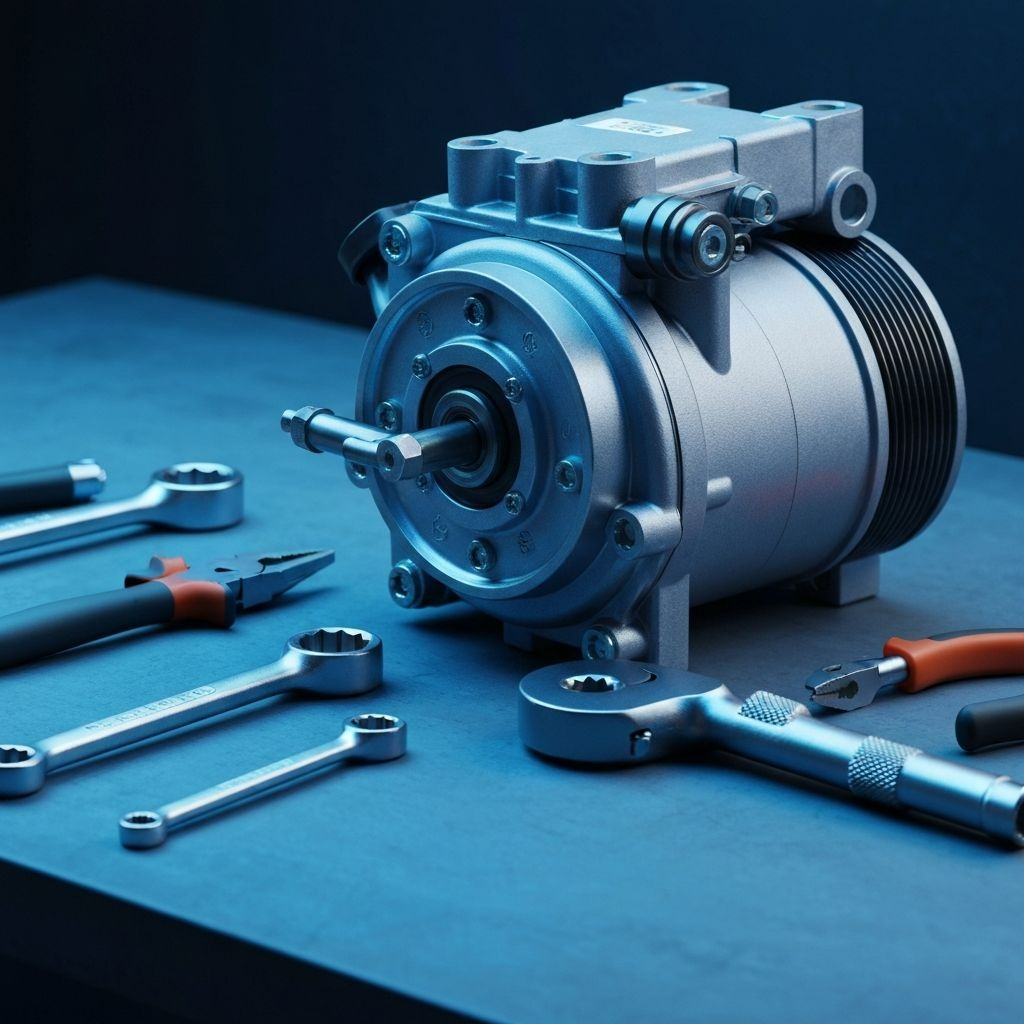
What Is a Car AC Compressor?
The AC compressor is often called the heart of your vehicle's air conditioning system, and for good reason. This critical component is responsible for compressing the refrigerant gas and pumping it through the entire AC system, creating the pressure differential that makes cooling possible.
Without a functioning compressor, your car's air conditioning simply cannot produce cold air. Understanding how this component works, recognizing when it's failing, and knowing what replacement should cost can save you significant money and discomfort.
How the AC Compressor Works
The compressor receives low-pressure refrigerant gas from the evaporator (located inside your dashboard). It then compresses this gas, dramatically increasing its pressure and temperature. This high-pressure, high-temperature gas then flows to the condenser at the front of the vehicle, where it releases heat and transforms into a high-pressure liquid.
The compressor is driven by the engine through a serpentine belt and uses an electromagnetic clutch to engage and disengage. When you press the AC button, this clutch activates, connecting the compressor to the engine's power.
7 Warning Signs of a Failing AC Compressor
1. Unusual Noises When AC Is On
A failing compressor often produces grinding, squealing, or rattling noises when the AC is engaged. These sounds indicate internal bearing failure or a worn clutch mechanism.
2. Weak or Warm Air from Vents
If the compressor can't maintain proper pressure, it won't effectively circulate refrigerant. The result is air that's barely cool or completely warm.
3. AC Clutch Not Engaging
When you turn on the AC, you should be able to hear a click as the compressor clutch engages. If you see the clutch pulley spinning but the center hub isn't engaging, the clutch may have failed.
4. Visible Refrigerant Leaks
The compressor has multiple seals and gaskets that can deteriorate over time. Oily spots or residue around the compressor housing often indicate a refrigerant leak.
5. Circuit Breaker Tripping
If the compressor is seizing or overloading, it may cause the AC fuse or relay to blow repeatedly. Check your fuse box if the AC suddenly stops working.
6. Hard-Shifting or Engine Stalling
A seized compressor puts excessive load on the engine through the drive belt. This can cause rough idling, stalling, or difficulty during acceleration.
7. Burning Smell
If the compressor seizes while the belt is still trying to turn it, you may smell burning rubber from the slipping belt. This requires immediate attention to prevent further damage.
AC Compressor Replacement Cost Breakdown
The total cost of an AC compressor replacement varies significantly based on your vehicle make, model, and location. Here's a general breakdown:
Parts Cost: OEM parts are more expensive than aftermarket alternatives, but offer guaranteed fit and reliability.
Labor Cost: depending on the complexity of the installation. Some vehicles have compressors that are easy to access, while others require significant disassembly.
Additional Parts: the receiver/drier (accumulator), expansion valve, and O-rings that should be replaced during a compressor swap.
Refrigerant and Oil: new refrigerant and compressor oil.
Should You Repair or Replace?
In most cases, a failing compressor should be replaced rather than rebuilt. The cost difference between a quality rebuilt compressor and a new one is often not worth the risk. However, some specific issues can be addressed without full replacement:
- Clutch failure only: The clutch assembly can sometimes be replaced separately at a fraction of the cost.
- Seal leaks: External seals can occasionally be replaced without removing the compressor.
- Electrical issues: Wiring and connector problems are separate from the compressor itself.
Tips for Extending Compressor Life
- Run your AC regularly — even in winter, run the AC for 10-15 minutes weekly to keep seals lubricated and prevent them from drying out.
- Don't blast cold air immediately — let the engine warm up for a minute before engaging the AC, especially in cold weather.
- Address small issues quickly — a minor refrigerant leak today becomes a compressor failure tomorrow.
- Use certified technicians — improper refrigerant charging or wrong oil type can destroy a compressor.
- Replace the cabin filter regularly — a clogged filter causes the system to work harder, putting extra strain on the compressor.